
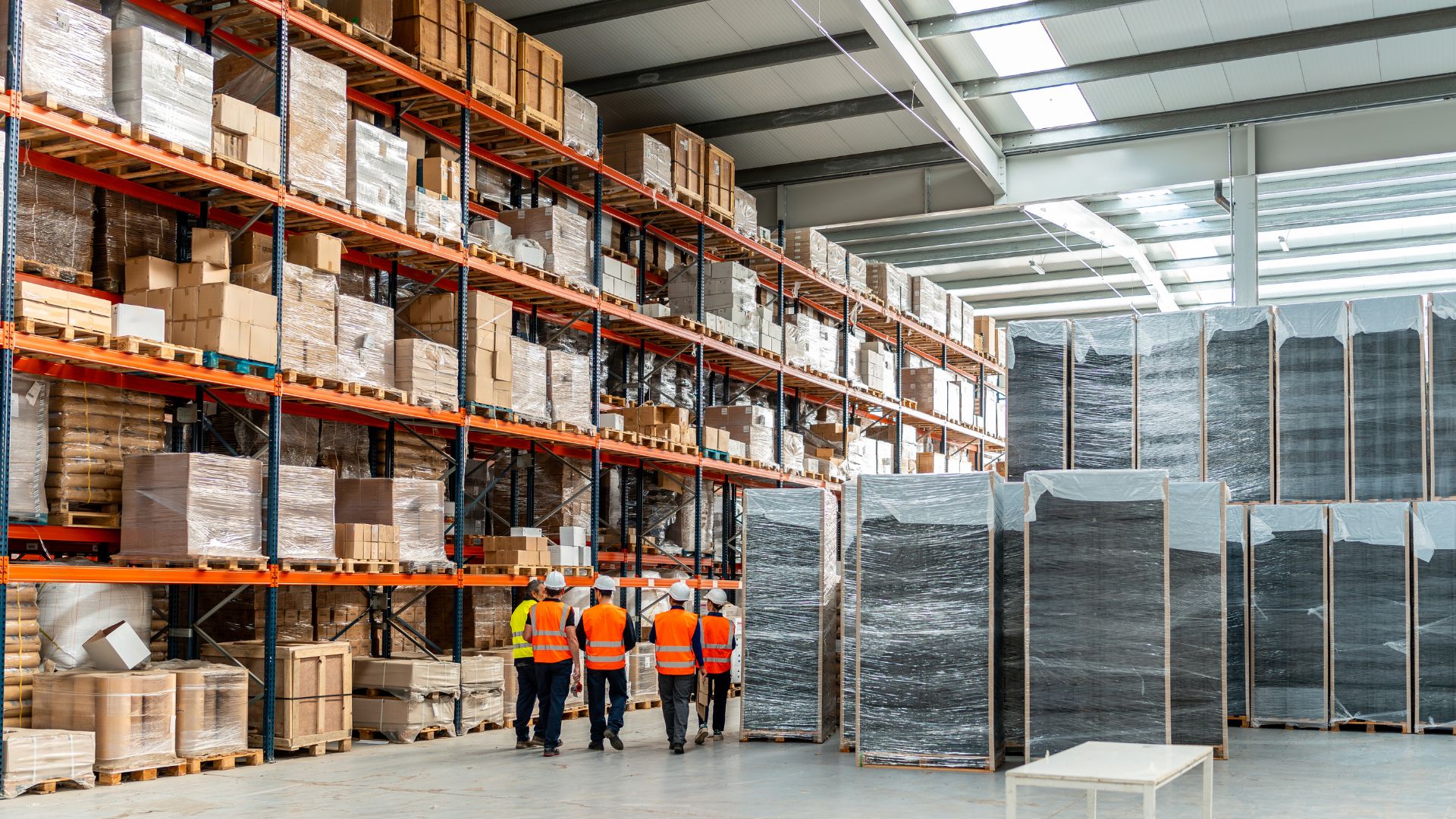
From Factory Floor to Supply Chain Strategy: Lessons from the Frontlines
Supply chain is often discussed in terms of systems, costs, and efficiency. But in practice, it is shaped just as much by people, disruption, and day-to-day decision-making as it is by planning models or operating metrics. For growing businesses, especially in food and consumer products, supply chain is not just a support function — it is the foundation that determines whether growth is sustainable.
This conversation explores that reality through a series of stories and lessons from Pedrom’s career across manufacturing, strategic planning, and international supply chain leadership. From factory disruptions to distributor failures, the discussion highlights what emerging brands should understand about operational risk, partner selection, and the human side of supply chain performance.
From Engineering to End-to-End Supply Chain
Pedrom’s background began not in planning, but in engineering. With a degree in chemical engineering and early experience in manufacturing environments, his first years were spent deep in factory operations — on the floor, close to equipment, operators, and production realities. That hands-on foundation later evolved into strategic planning and broader supply chain leadership, supported by an MBA and a move into more complex business and network decisions.
Over time, that experience expanded into strategic roles at Unilever, including planning across North American brands and ultimately leading end-to-end supply chain responsibilities within Unilever International. Alongside that corporate experience, Pedrom increasingly found himself drawn to the challenges faced by smaller and medium-sized businesses, where the operational stakes are high and the impact of good supply chain decisions is immediate.
Why Operational Disruptions Matter More Than Most Teams Realize
One of the clearest lessons from the discussion is that disruption is never theoretical. It happens unexpectedly, and when it does, the underlying design of the supply chain becomes visible very quickly.
A seemingly absurd example — a squirrel causing a major power failure at a soap factory — illustrates a serious operational truth. Even when a disruption is unpredictable, the consequences depend on how prepared the system is to absorb it. Inventory levels, backup capacity, and the utilization rate of a factory all determine whether a business can recover quickly or spend weeks catching up.
For smaller brands working with co-manufacturers, the lesson is especially relevant. It is not enough to know who makes the product. Teams also need to understand what happens when something goes wrong. How much spare capacity exists? How fast can a supplier recover? What would happen after a downtime event? These questions are simple, but the answers reveal how much risk is sitting behind the operation.
The Importance of Knowing Your Partners Beyond Price
Throughout the conversation, a recurring theme is that the cheapest option is rarely the whole answer. Whether choosing a manufacturer, a distributor, or a logistics partner, the real question is not only what it costs, but how that partner operates under pressure.
That includes practical considerations like utilization, service capability, and flexibility. But it also includes less obvious factors, such as financial health, internal culture, and how people are treated on the ground. If a partner is stretched too thin, under-resourced, or poorly managed, those problems eventually show up in execution.
This is particularly important for emerging brands, which often do not have the leverage or margin for repeated mistakes. A low-cost partner that cannot recover from disruption, cannot scale when demand rises, or does not support its people properly may create more cost in the long run than it saves upfront.
When Supply Chain Risk Is Not Operational, but Financial
Not all supply chain breakdowns begin in a warehouse or factory. Sometimes the risk sits with the commercial partner itself.
One story from the conversation illustrates this clearly: a distributor that appeared stable, professional, and fully vetted ultimately went bankrupt shortly after receiving product. From a financial perspective, this may seem like a commercial issue. In practice, however, it immediately becomes a supply chain issue, because once product is in motion, operations absorb the consequences.
For growing brands, this is a critical reminder. Product flow is often the moment when the true strength of a partnership is tested. Before that, there are plans, contracts, and assumptions. Once inventory is shipped, invoiced, and expected to move through the market, any hidden weakness becomes real very quickly.
That is why backup plans matter. It is also why businesses should validate not just whether a partner can say yes, but whether they have the financial and operational runway to keep saying yes once the relationship is live.
The Human Side of Supply Chain Performance
A strong supply chain is not built only on systems and process maps. It is built on people.
One of the more unexpected examples in the discussion — a prolonged factory negotiation over the color of uniform pants — points to a broader truth: small details often reveal bigger operational realities. What may appear trivial at first can reflect deeper questions about working conditions, employee experience, and the health of the culture inside an operation.
This matters because supply chain performance is ultimately executed by people: line operators, warehouse teams, drivers, planners, quality staff, and managers. When those people are supported, heard, and equipped to do their jobs well, the operation performs differently. When they are not, the impact shows up somewhere in the product flow.
For brands evaluating partners, this means looking beyond the polished tour or lowest quote. It means paying attention to the environment, asking questions, and trusting what is visible in how teams work together.
Building a Supply Chain That Can Withstand Reality
The broader lesson from these stories is not that risk can be removed. It is that resilience has to be built intentionally.
That includes appropriate inventory, honest conversations with suppliers, clear visibility into partner capabilities, and contingency plans for when disruption occurs. It also means understanding that supply chain decisions are rarely isolated. A problem with labor, a power outage, a distributor failure, or an insurance gap can all create downstream consequences that touch customers, margins, and growth.
The strongest supply chains are not the ones that avoid chaos entirely. They are the ones designed to respond to it with speed, clarity, and informed trade-offs.
The Final Takeaway
Supply chain is often invisible when it is working well. But when it breaks, its importance becomes impossible to ignore.
For growing brands, the opportunity is not simply to build a cheaper or faster supply chain. It is to build one that is more aware, more resilient, and better aligned with the realities of growth. That starts with asking better questions, understanding partner risk more deeply, and recognizing that operations are ultimately driven by both systems and people.
A well-run supply chain is not just about moving product. It is about creating the stability, flexibility, and confidence that allow a business to scale.