
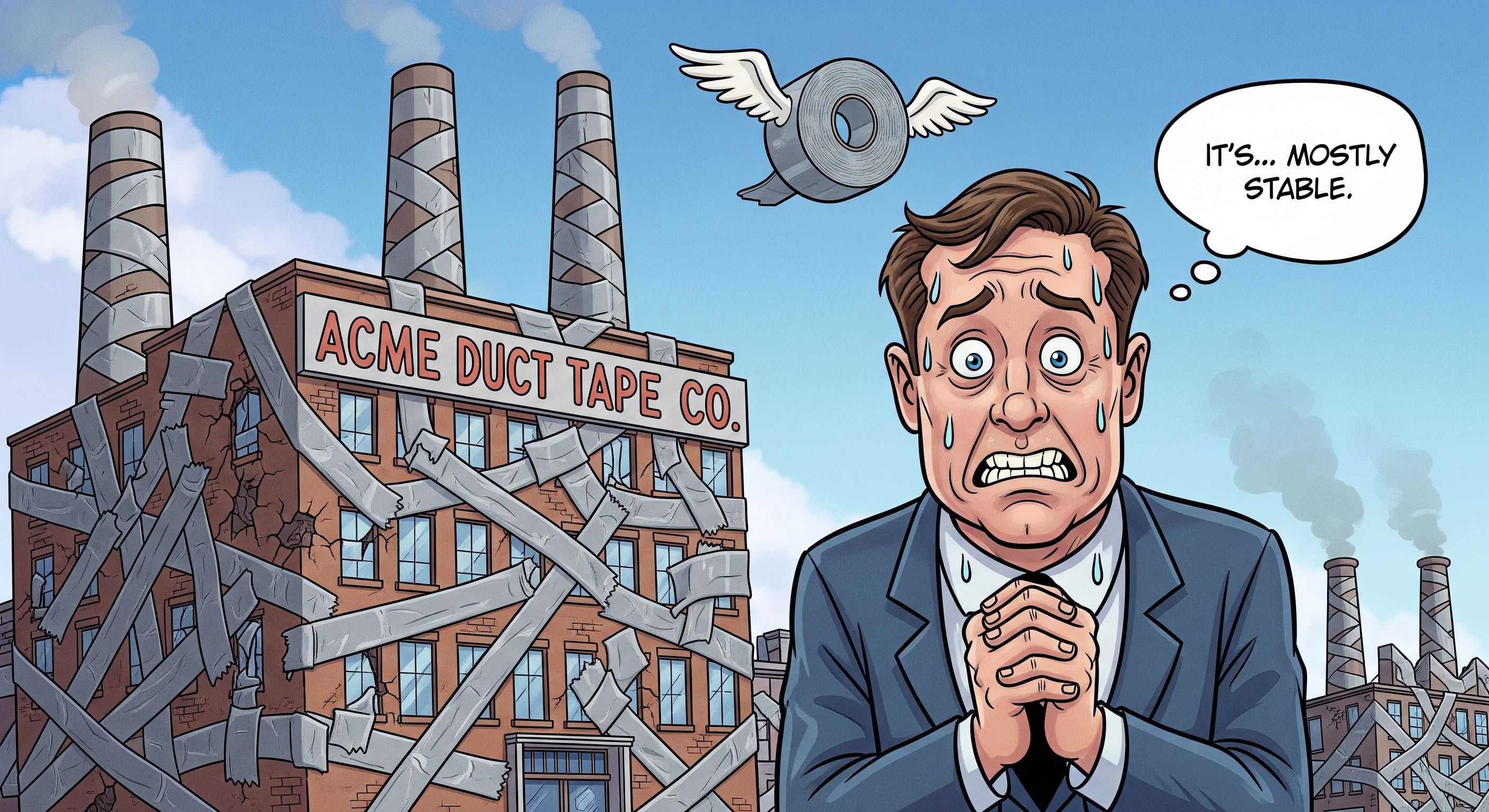
Have you ever done a factory tour and seen ACTUAL duct tape holding a piece of equipment together? Or just had that gut feeling that your entire supply chain is held up by duct tape and a prayer?
Yes….I have. It happens to everyone, especially when you’re growing fast. And you know what? It’s normal. You don’t necessarily have to fix every single thing that’s patched together. But before you move on to the next fire, it might be time to grab your team, point to a spot on your flowchart, and ask the big question: ⚡What else could go wrong here?⚡
It’s not about being a pessimist; it’s about being a realist and stress-testing your own value chain. Think of it as your own self-insurance policy, but without having to deal with difficult insurance brokers. It’s about knowing which pieces of duct tape are holding up a picture frame and which ones are holding up the whole roof.
So, Why bother with this when there’s 10 more fires without duct tape?
Let’s be real, this takes time you probably don’t have. But the reason to bother is simple: things are going to break. Supply chain disruptions aren’t a matter of if, but when.
Just to put some numbers on it, a 2024 report by Resilinc showed that global supply chain disruptions shot up by 38%. (Source: Resilinc)
The average loss when something does go wrong? It can be 6-10% of annual revenue plus reputational losses with customers. (Source: Economist Impact)
Taking a little time to poke holes in your own plan now will save you from a whole lot duct tape runs down the road.
The “Stress-Test” Process
This isn’t about creating a giant, boring report. It’s a living, breathing exercise to make you smarter about your business. Here’s how to do it.
Step 1: Map It Out – Value Chain Process
Get a whiteboard, a giant roll of paper, or the fanciest software tool you can find (with AI). The tool doesn’t matter. Just draw out the entire flow, from your suppliers’ suppliers all the way to your customer’s door.
Don’t just draw boxes. Who are your Tier 2 suppliers, the people who supply your suppliers? Where does that key ingredient really come from? Who’s the one person at your co-packer who knows how everything actually works? Get it all down on paper.
Step 2: Play “What If?” – Risk Assessment
Now for the fun part. Go node by node and start asking questions. Be creative. No idea is too crazy.
❌ What if your co-manufacturer has a labor strike for two months? ❌ What if your key ingredient supplier in California has a bad harvest due to drought? ❌ What if your star warehouse supervisor suddenly leaves to join a competitive bobsled team? (Hey, it could happen.) ❌ What if a new regulation passes and your packaging is no longer compliant?
Step 3: THE HARD PART – Be Honest About Your Risk Tolerance
This is where you have to be brutally honest with yourself and your team. Look at the list from Step 2 and ask the tough questions.
On a scale of 1-10, how bad would this actually be? A 2 (annoying) or a 10 (we’re out of business)?
On a scale of 1-10, how likely is this to happen? A 1 is your supervisor joining a bobsled team or a 10 is this happens every week.
You can’t fix everything, so don’t try. The goal here is to find the highest rated things that could genuinely hurt your business.
Step 4: Set the Backup Plans (If You Want)
For those big, scary risks you just identified, sketch out a “Plan B.” It doesn’t have to be perfect, just better than nothing.
If your top supplier is a risk… maybe it’s time to finally get a sample from that backup supplier you’ve been meaning to call.
If your co-packer is a single point of failure… maybe you build up a few extra weeks of finished goods inventory as a buffer.
If your logistics are a risk… maybe you find a backup freight carrier, even if they cost a little more.
Making This a Habit (Not a Project)
This isn’t a one-and-done task. It’s a muscle you build. Revisit the map every six months or so, especially after you land a big new customer or launch a new product.
The goal isn’t to eliminate risk or never have anything go wrong in your supply chain, which is impossible by the way. The goal is to understand your risks so you can choose which ones you’re willing to live with, and which ones you need a plan for. That’s how you move from being held together by duct tape to building a business that’s truly ready for scale.
By the way, if you’ve never done this, let me know. I can send some examples. If you hate writing on giant pieces of paper, I can help with that too.